|
|
Home →
Survival →
Food →
Edible Plants
Fiddleheads
(Ostrich Fern)
(Pteretis pensylvanica) |
| |
| The term "fiddleheads" refers to the unfurling
young sprouts of ferns. Although many species of ferns are
edible as fiddleheads, Ostrich Ferns are the best. They are edible only in
their early growth phase first thing in the spring. PLEASE
NOTE: Most or all other fern species are either unpalatable (too
tough or not very tasty) or contain high levels or carcinogens.
Ostrich Ferns are the safest in that they contain the least
amount of these. However, do not eat large quantities of even
Ostrich
ferns, as the carcinogens do accumulate over the short term. |
| |
|
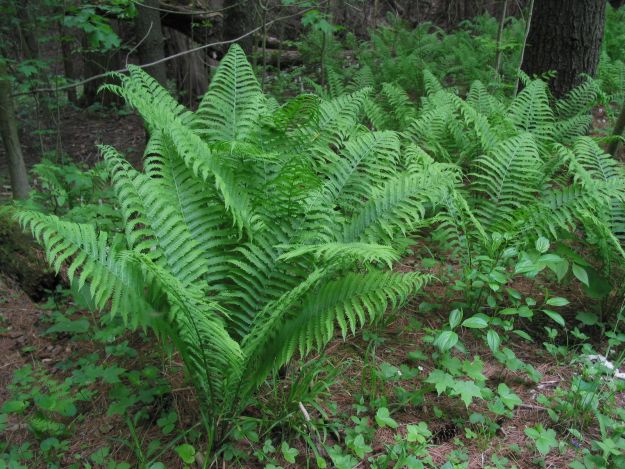
A nice stand of Ostrich ferns. They can grow
up to 6 or more feet tall!
This is not the stage at which you can eat them, however. |
|
 |
|
|
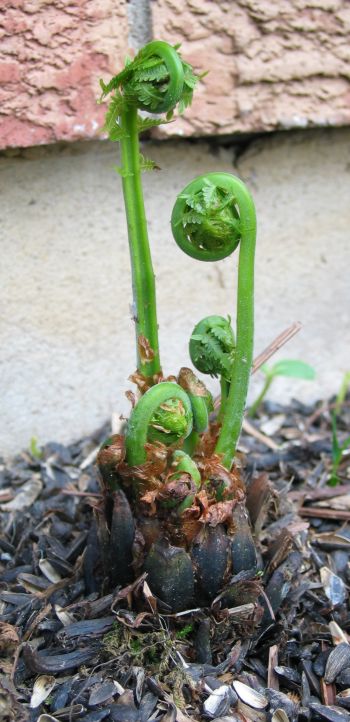 |
These are what you eat. They're known as "fiddleheads" because of their
resemblance to the neck of a violin (fiddle). Simply steam them until
they're tender. Good with butter and salt, if you like. |
|
|
|
|
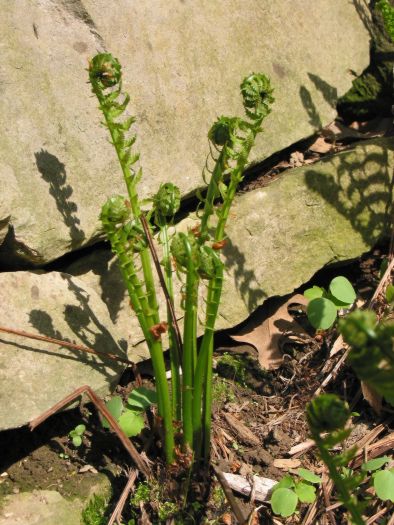 |
A couple of these fiddleheads are too big to eat (the two tallest ones).
Note how all the fronds grow up from a single point. |
|
|
|
|
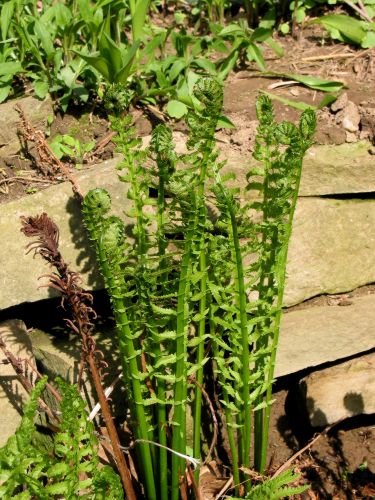 |
And all of these are too tall to eat. This photo is included to show how
they unfurl as they grow upwards. |
|
|
|
|
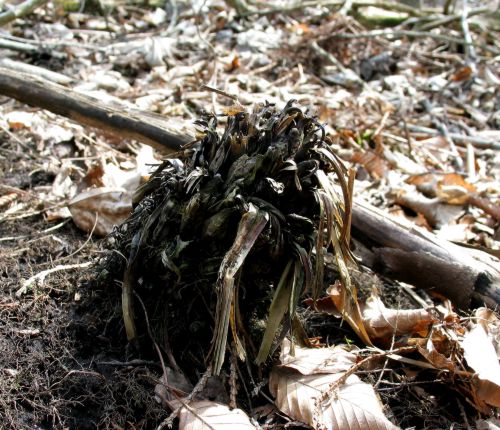 |
The stub of an Ostrich Fern plant. This is what overwinters, and the new
fronds sprout from this in the spring. |
|
|
|
|
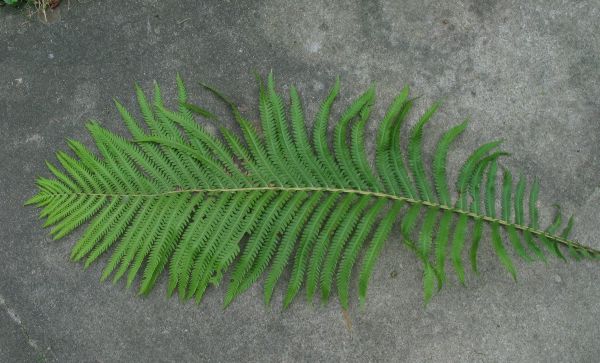
The classic leaf shape of the Ostrich Fern |
|
 |
|
|
|
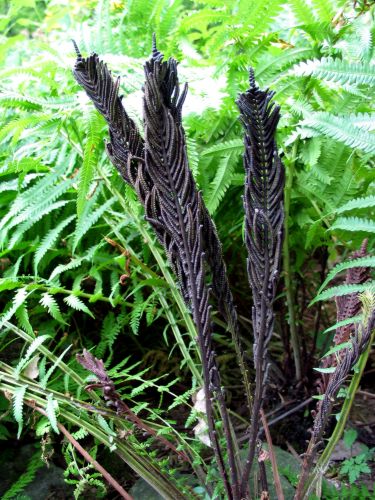 |
These are the Ostrich Fern's "fertile" fronds - the ones that produce spores. |
|
|
|
|
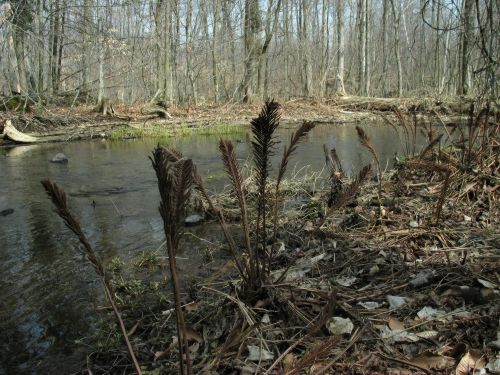 |
So, you can look for these dead fertile fronds in the winter, in order to
locate Ostrich Ferns for later use in the spring. |
|
|
|
|
|
|
Fiddleheads
by Allan "bow" Beauchamp
(text and photos by
Allan "bow" Beauchamp)
[Please note that the fiddleheads shown in this
section are those of Cinnamon Fern, not Ostrich Fern.] |
|
|
|
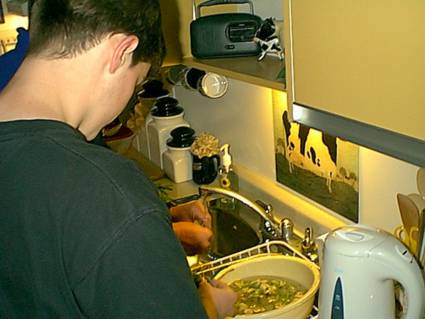 |
Here is my son Nicholas preparing a batch of fiddle heads. We wash them,
remove the "hairs" , then start to cook them. |
|
|
|
|
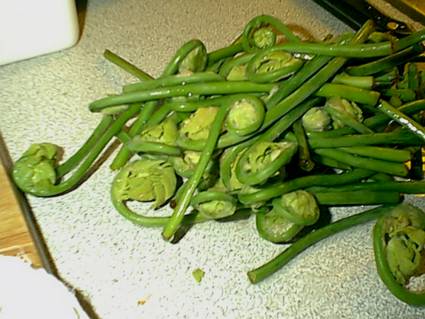 |
All nicely washed and prepared. |
|
|
|
|
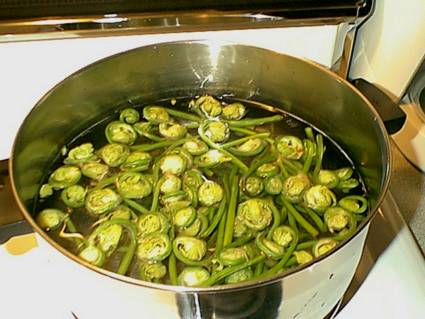 |
I like to boil them till they're soft. |
|
|
|
|
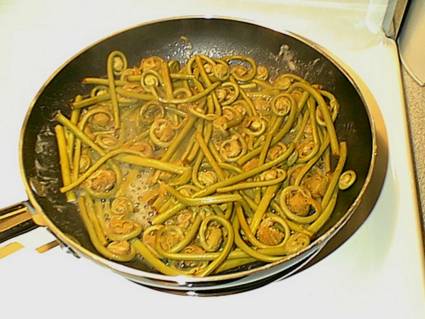 |
I like to fry my fiddle heads when I'm done boiling -- just a matter of taste.
When I was in grade four in primary school my teacher used to bring them in
for us and cook them in class.
We ate them boiled like that; they were good, and it's a matter of taste. |
|
|
|
|
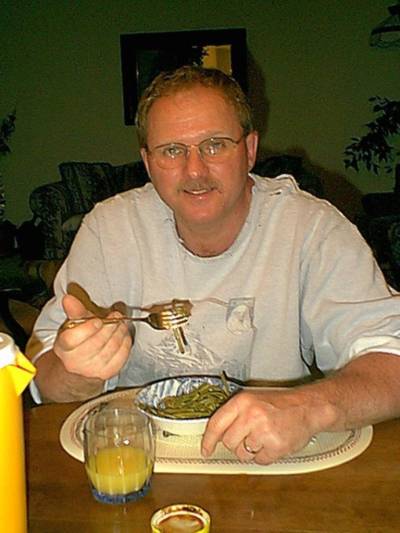 |
I'm enjoying my bush lunch after my long day of scouting in the north country.
I was out walking for almost ten hours so this was a real treat when I got
home! |
|
|
|
|
|


