|
|
Home →
Survival →
Food →
Poisonous Plants
Water Hemlock & Bulblet-bearing Water Hemlock
Cicuta maculata &
Cicuta bulbifera
|
|

The Water Hemlocks are the most poisonous plants in
North America. All parts are deadly poisonous. Even a small mouthful can
kill an adult.
Therefore it stands to reason that ingesting even a little
bit of the juice will make a person seriously ill.
So, it is best to learn to identify these plant by sight,
rather than characteristics that require you to handle it or examine the
roots or inside of the stem. It is so virulently poisonous that it is best
to avoid handling it at all.
Most poisonings have occurred due to confusion with edible
look-alikes.
Please do not rely solely on this web page for identifying
these plants. Consult field guides for more detailed information.
Do not handle these plants. If you do, thoroughly clean your
hands immediately afterwards. Take appropriate steps to avoid accidentally
ingesting any part of these plants or their juice. It is
particularly important for wilderness survival enthusiasts to learn this
plant, as its stems are hollow and are therefore appear to be ideally suited
for use as straws. Don't make use of this plant in this way - many
poisonings have occurred in this manner. |
|
|
|
|
|
|
|
Water Hemlock
(Cicuta maculata) |
|
|
|
Other common names: Spotted Cowbane Family: Parsley Family (Apiaceae)
Distinctive features: Wet areas. Alternate twice-compound leaves; leaflets
sometimes haphazard in arrangement.
Similar species:
- Water Parsnip - very similar, except the leaves are only
once-compound
- Cowbane - Also poisonous, and closely resembles Water Parsnip.
- Mock Bishop's Weed
-
Bulb-bearing Water Hemlock
- Wild Carrot (Queen Anne's Lace) - but this plant grows in dry
areas
- Other members of the
Parsley Family.
Height: 3-6 feet tall
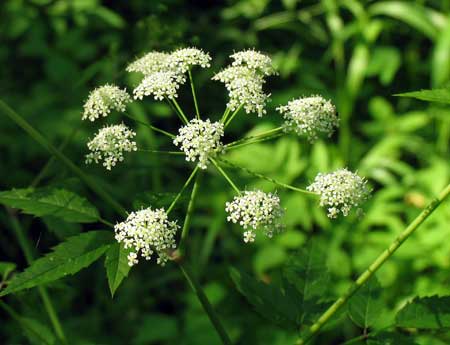
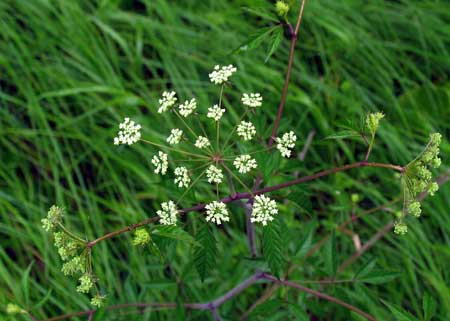
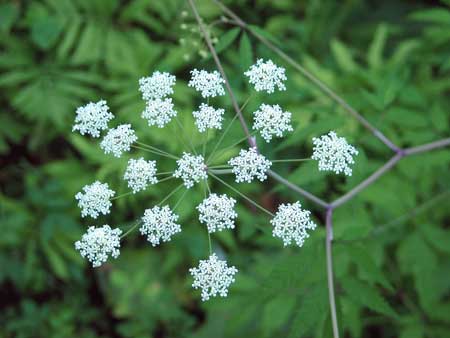
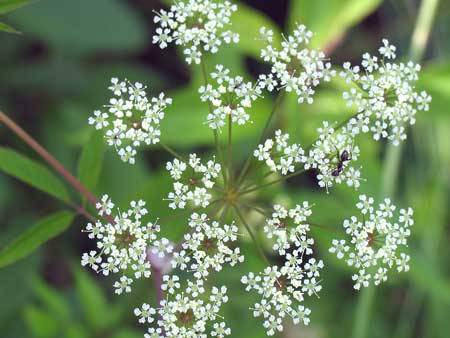
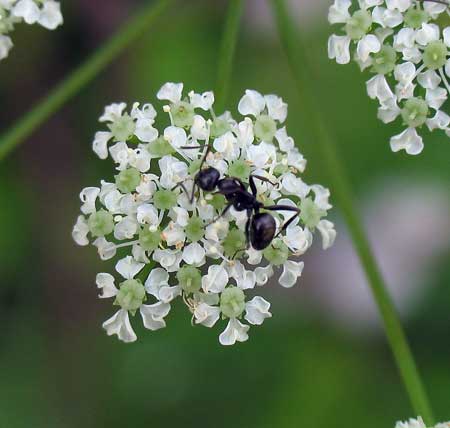
Flowers: Small white flowers in a flat or rounded umbel (an
umbrella-shaped cluster) 2-5" wide. Individual flowers about
1/8" wide, have 5 petals and 5 stamens.
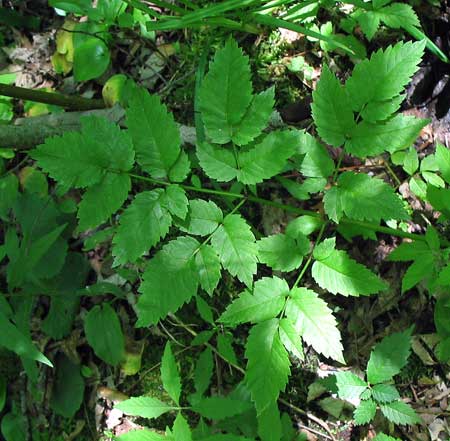
Leaves: Alternate compound leaves with lance-shaped leaflets,
pointed, with numerous teeth. Note the sometimes multiples of leaves
giving rise to a somewhat haphazard arrangement of leaves along the leaf
stem. Sometimes doubly compound or lobed. Sometimes tinged with red. Up to
about 4" long, 1.5" wide. The veins on the leaflets end at the
notches between the teeth (this is unusual in plants).
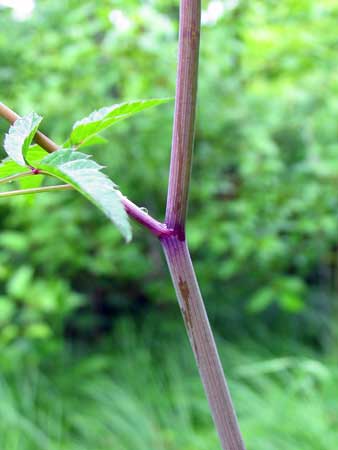
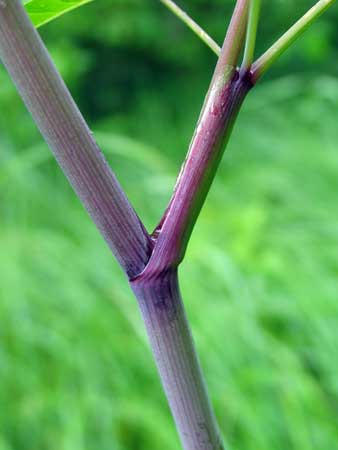
Stem: Branching, smooth & stout, often mottled or solid purple.
Hollow. Lower part
of stem chambered. Roots have fat tuberlike branches.
Habitat: Wet open areas such as marshes, along shores, and
sometimes open swamps.
Longevity: Perennial
The information on this page has been taken from my
Ontario Wildflowers
website.
|
|
|
|
|
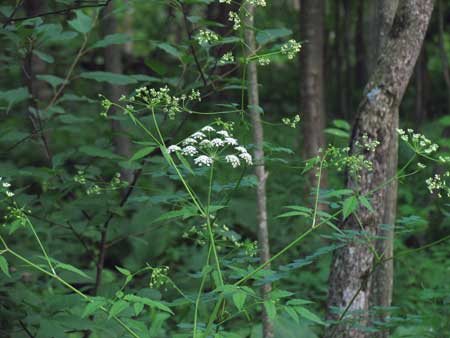
The whole plant. Note its somewhat open ragged look. |
|
|
|
|
|
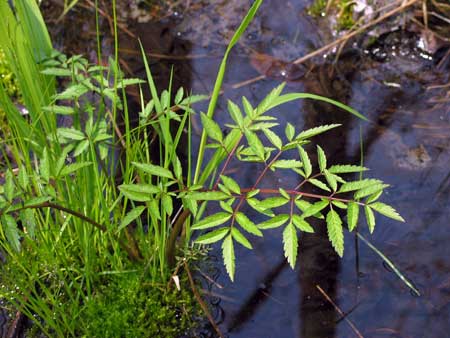
Leaves. |
|
|
|
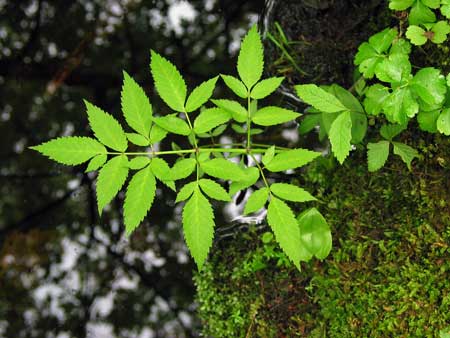 |
Another look at the leaves. |
|
|
|
|
|
These leaves are a bit abnormal - they are "chunkier"
than usual. As always with plant identifications ...
watch out for the aberrant individuals. |
|
|
|
|
|
Flower umbel. |
|
|
|
|
|
Many mini-clusters of tiny flowers. |
|
|
|
|
|
|
|
|
|
A closer view. |
|
|
|
|
|
Individual flowers. |
|
|
|
|
|
Photo of the stem. Note the purplish tinge. Also note the "glaucous" aspect of the stem - the whitish bloom
which is easily wiped off. |
|
|
|
|
|
Another stem. Note also the fine vertical lines running
vertically along the stem. The stems are hollow. This
tempting aspect has led to poisonings of children who find the stems
appealing as pea shooters. |
|
|
|
|
|
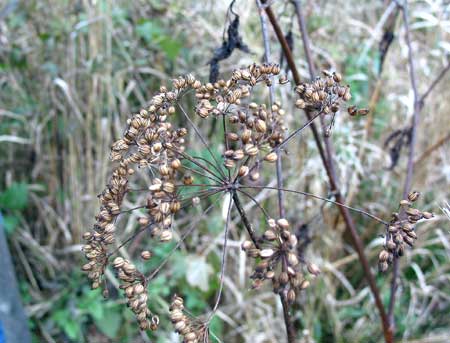
Seeds in late fall, early winter. |
|
|
|
|
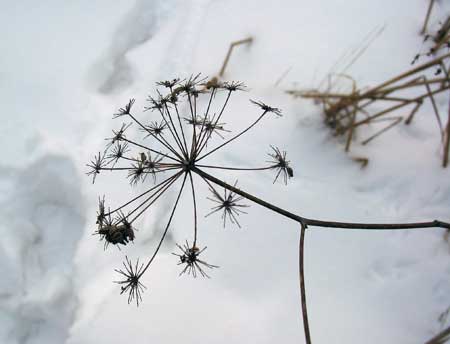
|
Water Hemlock in the dead of winter. Note
the leftover flower umbel. Get to know this plant very
well in the summer, so you can avoid it in the winter. |
|
|
|
|
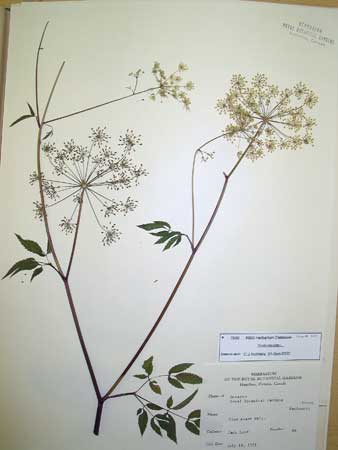
|
Herbarium specimens of Water Hemlock. (Photo taken at the Royal Botanical Gardens Herbarium, Burlington,
Ontario) |
|
|
|
|
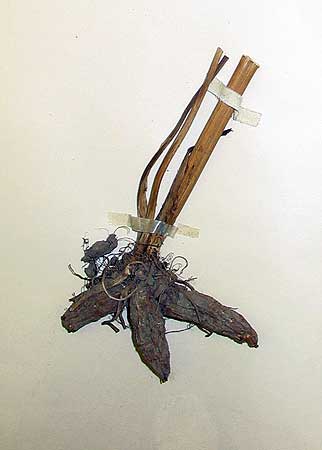
|
This herbarium specimen shows the tuberous roots. |
|
|
|
|
|
|
|
Bulb-bearing Water Hemlock
(Cicuta bulbifera) |
|
|
|
Other common names: Bulblet-bearing Water Hemlock Family:
Parsley
Family (Apiaceae)
Distinctive features: Spindly plant. Leaves narrow and finely divided.
Wet areas. Stem hollow.
Similar species:
- Water Hemlock - The leaves are very different.
- Mock Bishop's Weed
- Other members of the
Parsley Family.
Height: 3-7 feet tall
Flowers: Sparse, white, in an umbel (an umbrella-shaped cluster)
about 1-2" wide. Individual flowers about 1/8" wide, with 5 petals and 5
stamens.
Leaves: Widely spaced alternate compound leaves have very narrow
leaflets. Leaflets up to 3" long. Widely spaced ragged teeth. Tiny bulblets occur in the axils (where a
leaflet joins the stem).
Stem: Widely spaced branches. Hollow.
Habitat: Wet open areas such as marshes, along shores, and
sometimes open swamps
Longevity: Perennial
Comments: DEADLY POISONOUS The information
on this page has been taken from my
Ontario Wildflowers
website. |
|
|
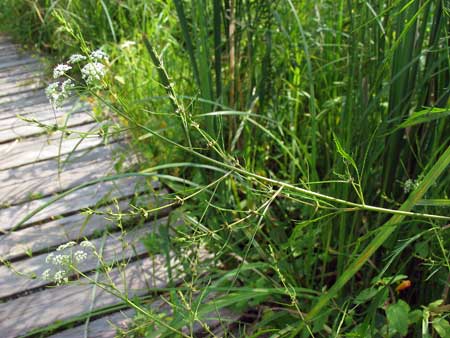 |
A Bulb-bearing Water Hemlock reaching over a boardwalk. |
|
|
|
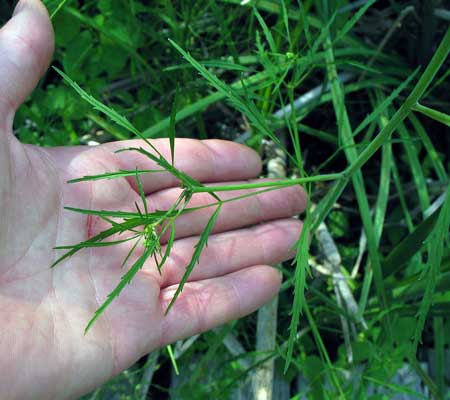 |
Note the narrow, almost filmy leaves. |
|
|
|
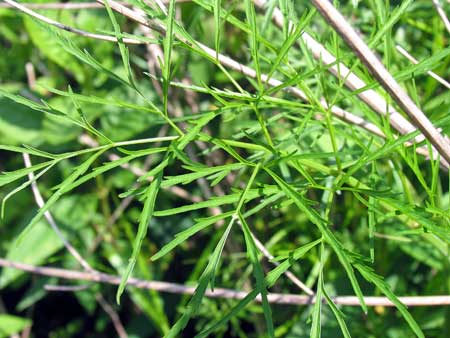 |
The leaves of this plant are very different from "regular"
Water Hemlock. |
|
|
|
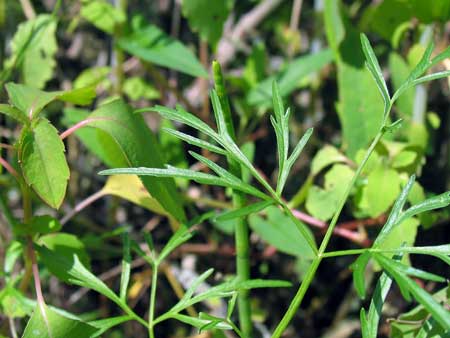 |
A close view of a leaf. |
|
|
|
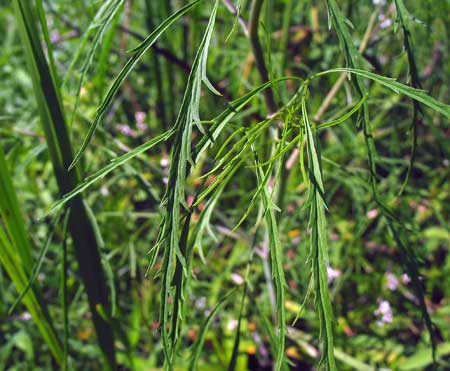 |
And another. |
|
|
|
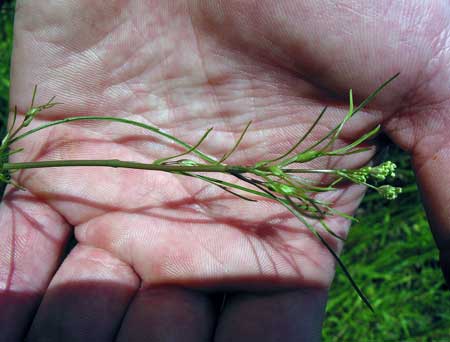 |
This photo shows the bulbs that grow along the stems. They are not
always visible. |
|
|
|
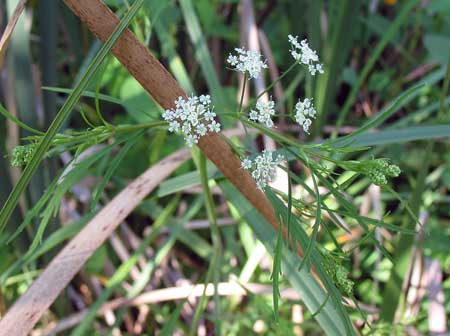 |
Flowers. |
|
|
|
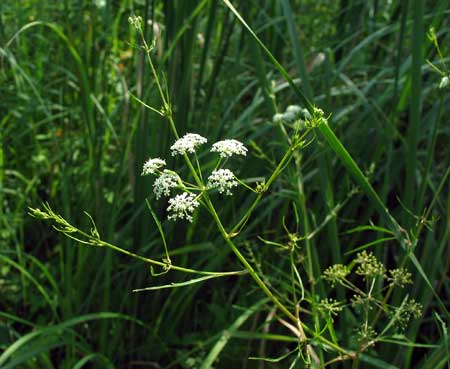 |
The flowers seems to be a bit sparser than those of regular
Water Hemlock. |
|
|
|
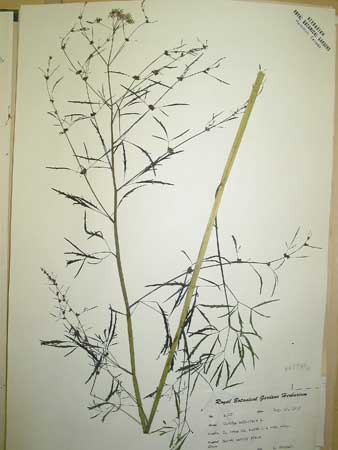 |
Herbarium specimen of Bulb-bearing Water Hemlock. (Photo taken at the Royal Botanical Gardens Herbarium, Burlington,
Ontario) |
|
|
|
|
|